Tula Explore Baby Carrier Instructions: A Comprehensive Guide
Welcome to the ultimate resource for mastering your Tula Explore! This guide provides detailed instructions, safety information, and care tips for comfortable and secure babywearing experiences.
Explore all modes – newborn, inward/outward facing, hip, and back carry – with our step-by-step instructions, ensuring both you and your little one enjoy every moment.
Understanding the Tula Explore Carrier
The Tula Explore Carrier represents a significant advancement in ergonomic babywearing, designed as an all-in-one solution adaptable to your growing child’s needs. Unlike some carriers requiring separate infant inserts, the Explore boasts adjustable features allowing for safe and comfortable use from newborn stage through toddlerhood – approximately 0-48 months, or up to 60 lbs.
Key to its versatility is the adjustable panel, which easily transitions between narrow for newborns and wider for older babies and toddlers. Furthermore, the adjustable panel height ensures optimal support and positioning as your baby develops. The Explore is designed with comfort for both parent and baby in mind, featuring padded shoulder straps and a supportive waist belt. It’s crucial to understand these adjustable components to achieve a secure and ergonomic fit, adhering to the EN 13209-2:2006 safety standards. Proper understanding of these features is paramount for a positive babywearing journey.
Key Features and Benefits
The Tula Explore Carrier is packed with features designed for both parent and baby’s comfort and convenience. Its all-in-one design eliminates the need for infant inserts, simplifying the babywearing experience. The adjustable panel width and height ensure a customized fit as your child grows, supporting healthy hip development in the crucial “M” position.
Padded shoulder straps and a supportive waist belt distribute weight evenly, reducing strain on your back and shoulders. Multiple carrying positions – newborn, inward/outward facing, hip, and back carry – offer versatility for various ages and preferences. The carrier is crafted from durable, machine-washable materials for easy care. Beyond comfort, the Explore promotes bonding and allows for hands-free parenting, fostering a closer connection while maintaining your mobility. It meets EN 13209-2:2006 safety standards, providing peace of mind.
Safety Precautions
Prioritize safety when using the Tula Explore Carrier. Always ensure baby is securely positioned with their airway clear, and regularly check for obstructions. Be mindful that your balance may be affected by your and your baby’s movements; exercise caution when bending or leaning. Never allow a baby to be positioned in a way that their face is pressed against the carrier or your body.
Inspect the carrier regularly for any signs of damage – tears, loose stitching, or broken buckles – and discontinue use if found. Always follow the weight and age guidelines for each carrying position. Never leave a baby unattended while in the carrier. Be aware of potential hazards in your environment. Adhering to these precautions, alongside the EN 13209-2:2006 standards, ensures a safe and enjoyable babywearing experience.

Preparing the Carrier for Use
Before your first adventure, familiarize yourself with adjusting the panel width and height, and properly configure the shoulder and waist straps for optimal comfort and support.
Adjusting the Panel Width
The Tula Explore’s panel width is crucial for ensuring your baby’s hips are correctly positioned in the ergonomic “M” position, promoting healthy hip development. To adjust, locate the buttons or toggles on the sides of the carrier panel.

Squeeze or pull these adjusters to either widen or narrow the panel. A narrower setting is ideal for newborns (0-3 months), providing a snug, secure fit. As your baby grows (3+ months), gradually widen the panel to accommodate their increasing leg width.
Ensure the fabric comfortably surrounds your baby’s legs, from knee to knee, without any pressure points. Regularly check the width as your baby gains weight and size. Proper width adjustment is vital for both comfort and safety, supporting healthy hip alignment during every carry.
Always prioritize a snug, yet comfortable fit, allowing for natural leg movement.
Adjusting the Panel Height
The Tula Explore carrier offers adjustable panel height, adapting to your baby’s growing stature and ensuring optimal support at each stage. Locate the straps with buckles or adjusters on the back panel of the carrier. These control the panel’s height.
For newborns and smaller babies, utilize the “rolled edge” or “folded panel” setting, creating a smaller, more secure pocket. This provides essential head and neck support. As your baby grows taller (around 4-6 months), release these adjusters to extend the panel height, providing ample leg room and back support.
Ensure the panel height is appropriately adjusted so the top edge sits comfortably behind your baby’s ears, without obstructing their airway. Regularly reassess the height as your baby develops, guaranteeing a comfortable and ergonomic fit throughout their early years.
Proper height adjustment is key for both baby’s comfort and the carrier’s functionality.
Strap Adjustments: Shoulder & Waist
Achieving a secure and comfortable fit with your Tula Explore relies on proper strap adjustments. Begin with the waist belt, positioning it snugly around your hips, not your waist. Tighten using the side release buckles until it feels secure but not constricting.
Next, adjust the shoulder straps. Loosen them fully before placing the carrier on, then tighten gradually. The goal is to eliminate any slack while maintaining comfortable padding on your shoulders. Utilize the strap adjusters (typically located near the shoulders) to fine-tune the fit.
Ensure the straps form a “W” shape across your back, distributing weight evenly. Avoid overtightening, which can cause discomfort. Regularly check and readjust straps as your baby’s weight shifts or clothing changes, guaranteeing optimal support and comfort for both of you.
Proper adjustments are crucial for safe and enjoyable babywearing.
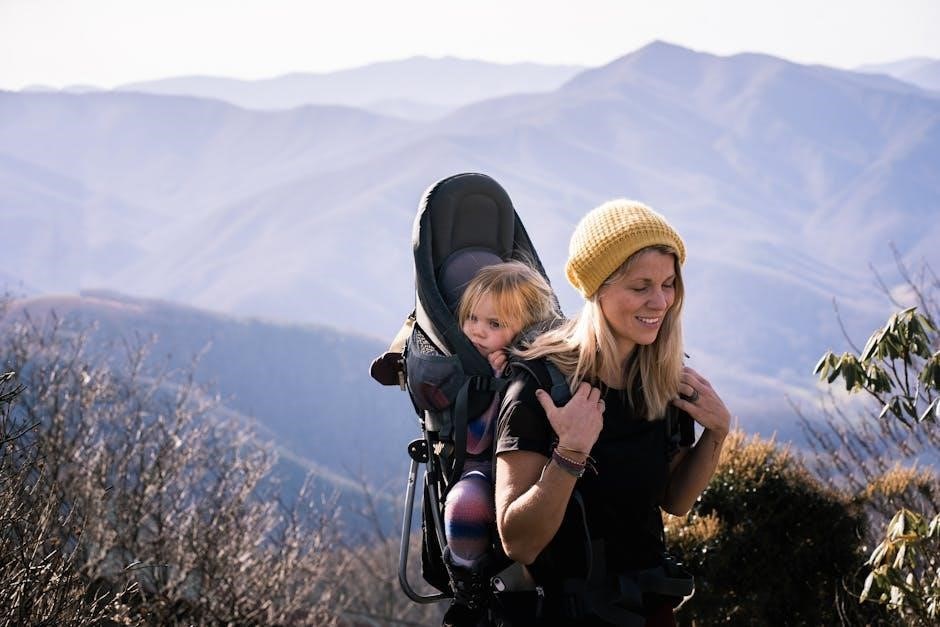
Carrying Positions: A Step-by-Step Guide
Discover the versatility of the Tula Explore! This section details how to safely and comfortably utilize each carrying position, from newborn snuggles to adventurous back carries.
Newborn Mode (0-4 Months)
Ensuring optimal support for your newest arrival is paramount. The Tula Explore’s Newborn Mode is specifically designed for babies aged 0-4 months, or until they demonstrate head and neck control. Begin by ensuring the panel is in its narrowest setting, accommodating your newborn’s developing frame.
Carefully position your baby high on your chest, ensuring their face is visible and positioned away from the carrier fabric – a minimum of two finger-widths is recommended to maintain a clear airway. Always fully support the baby’s head and neck.
Secure the panel height to the ‘Newborn’ setting, utilizing the adjustable features to create a snug, ergonomic ‘M’ position for their hips. Double-check all straps are tightened securely, but not overly so, to provide a comfortable and safe carry. Remember to regularly monitor your baby for signs of discomfort or restricted breathing.
Inward-Facing Mode (2-12 Months)
As your baby grows and gains head control, transition to Inward-Facing Mode. Suitable for babies aged 2-12 months, this position allows for close connection while supporting healthy hip development. Ensure the panel width is adjusted to comfortably fit your baby’s legs, maintaining the ergonomic ‘M’ position – knees higher than their bottom.
Adjust the panel height to the appropriate setting, ensuring baby’s shoulders are covered and their head is supported. Carefully position your baby facing you, confirming their airway remains clear and unobstructed. Secure all straps, prioritizing a snug yet comfortable fit.
Regularly check your baby’s posture and comfort levels during use. Remember to distribute weight evenly and maintain good posture yourself. This mode fosters bonding and allows you to easily monitor your little one’s cues.
Outward-Facing Mode (6+ Months)
Once your baby demonstrates strong head and neck control, typically around 6 months, you can introduce Outward-Facing Mode. This position allows your little one to explore the world around them while remaining securely held. Ensure the panel is fully extended and adjusted to comfortably accommodate your baby’s wider leg position, maintaining the crucial ‘M’ position for healthy hip development.
Carefully position your baby facing outwards, verifying their airway is clear and unobstructed. Double-check all strap adjustments, ensuring a snug and secure fit. Be mindful of your baby’s cues; some may enjoy this position for shorter periods initially.
Always support your baby’s back and legs during transitions. Regularly assess their comfort and adjust the carrier as needed. This mode encourages curiosity and provides a new perspective for your growing explorer.
Hip Carry Mode (6+ Months)

Hip Carry Mode is ideal for older babies (6+ months) who are developing core strength and enjoy greater freedom of movement. Begin by loosening the waist belt and carefully slide the baby around to your hip, lifting them up and out of the carrier. Ensure the panel is adjusted to provide adequate coverage and support for their back and legs.
Confirm your baby is in the ‘M’ position, with knees higher than their bottom, promoting healthy hip development. Tighten the waist belt securely to maintain a stable and comfortable carry. Regularly check your baby’s positioning and adjust as needed.

This position allows for easy on-and-off access and is perfect for active parents. Always support your baby during transitions and be mindful of your balance.
Back Carry Mode (12+ Months)
Back Carry Mode is designed for older, stronger babies (12+ months) and offers a comfortable, ergonomic carry for longer periods. Begin by loosening all straps. Carefully lift your baby onto your back, supporting their head and neck. Ensure the panel is fully adjusted to their height and width for optimal support.
Secure the shoulder straps and waist belt, tightening them gradually to achieve a snug and secure fit. Regularly check your baby’s positioning, ensuring they are upright and their back is supported. The ‘M’ position remains crucial for healthy hip development.
This mode distributes weight evenly, reducing strain on your back and shoulders. Always have assistance when initially transitioning to back carry, and be mindful of your surroundings.

Proper Baby Positioning
Ensuring correct positioning is vital for comfort and safety. Maintain the “M” position, support the baby’s head, and always check for unobstructed airways during each carry.
The “M” Position: Ensuring Hip Health
Achieving the “M” position is paramount for healthy hip development in your baby. This natural position mimics the way a baby is held in arms, promoting optimal hip joint formation.
To ensure the “M” position, your baby’s hips should be flexed, bent, and spread apart. The knees should be higher than the bottom, forming a distinct “M” shape when viewed from the front or side. Avoid positions where the legs are straight and adducted (pressed together), as this can potentially contribute to hip dysplasia.
When using the Tula Explore carrier, carefully position your baby ensuring their hips are comfortably nestled in this natural “M” shape. Regularly check the positioning, especially during adjustments or when the baby shifts within the carrier. Proper positioning supports healthy hip development and maximizes comfort for your little one during babywearing adventures.
Prioritizing the “M” position demonstrates a commitment to your baby’s long-term musculoskeletal health.
Head Support for Newborns
Newborns require dedicated head and neck support within the Tula Explore carrier. Their neck muscles are still developing, making adequate support crucial for safety and comfort.
When using the carrier in newborn mode, ensure the adjustable panel is fully tightened to provide a snug, secure enclosure. The panel should completely surround the baby, offering firm support to the head and neck. Always check that the fabric is taut and that the baby’s head is not flopping to the side or forward.
Regularly monitor your newborn to confirm their head remains securely supported throughout the carry. Adjust the panel as needed as your baby grows, maintaining consistent support until they gain sufficient head control. Prioritizing head support ensures a safe and enjoyable babywearing experience for both of you.
Remember, a well-supported head is essential for a comfortable and secure ride!
Checking for Airway Obstruction
Maintaining a clear airway is paramount when babywearing with the Tula Explore carrier. Regularly check your baby’s position to ensure their breathing isn’t restricted.
The “chin-to-chest” position is a significant danger sign. Ensure your baby’s chin is not pressed against their chest, as this can obstruct their airway. There should always be at least one or two finger-widths of space between your baby’s chin and their chest. Regularly peek at your baby to confirm this space is maintained.
Observe your baby for any signs of distress, such as changes in skin color (bluish tint), difficulty breathing, or unusual silence. If you notice any of these signs, immediately stop and adjust the carrier. Prioritize airway safety above all else for a secure and comfortable babywearing experience.
Consistent monitoring is key to ensuring your little one breathes freely!
Care and Maintenance
Preserve your Tula Explore’s quality with gentle care! Machine wash cold, avoid bleach and ironing, and always line dry for lasting comfort and safety.
Washing Instructions
Maintaining the cleanliness of your Tula Explore carrier is essential for both hygiene and longevity. Always refer to the care label sewn into your carrier for the most accurate guidance, but generally, machine washing is permitted.
Use cold water and a mild detergent. Crucially, do not use bleach, as this can damage the fabric and potentially irritate your baby’s skin. A gentle cycle is recommended to minimize wear and tear on the carrier’s components. Before placing the carrier in the washing machine, ensure all buckles and straps are fastened to prevent snagging or twisting during the wash cycle.
For heavily soiled areas, a pre-treatment with a mild stain remover may be helpful, but always test the remover on an inconspicuous area first to ensure it doesn’t cause discoloration. Avoid using fabric softeners, as they can leave a residue that affects the carrier’s grip and performance. Following these washing instructions will help keep your Tula Explore fresh and ready for many adventures with your little one!
Drying and Storage
Proper drying and storage are vital to preserving the integrity of your Tula Explore carrier. After washing, do not use a dryer; instead, line dry the carrier. Heat can damage the fabric, elastic, and stitching, potentially compromising its safety and functionality. Laying the carrier flat or hanging it on a clothesline in a shaded area is ideal.
Avoid direct sunlight, as prolonged exposure can cause fading. Ensure the carrier is completely dry before storing it to prevent mildew or unpleasant odors. When storing, choose a cool, dry place away from direct sunlight and extreme temperatures. Loosely folding or rolling the carrier is preferable to tightly packing it, which could cause creases and damage the shape.
Storing your Tula Explore correctly when not in use will ensure it remains in excellent condition, ready for your next babywearing adventure. A well-maintained carrier provides lasting comfort and security for both you and your child!
Inspecting for Damage
Regularly inspecting your Tula Explore carrier is crucial for ensuring your baby’s safety and your peace of mind. Before each use, carefully examine all seams, stitching, buckles, straps, and the panel for any signs of wear and tear. Pay close attention to areas that experience high stress, such as the shoulder strap attachments and waist belt connections.
Check for frayed edges, loose threads, or any damage to the fabric. Ensure all buckles click securely and that the straps are fully adjustable and haven’t lost their elasticity. If you notice any damage, discontinue use immediately. A damaged carrier may not provide adequate support and could pose a safety risk.
If you suspect a defect or find any damage, contact Tula customer support for assistance. Do not attempt to repair the carrier yourself, as this could compromise its structural integrity. Prioritizing regular inspection helps maintain a safe and comfortable babywearing experience.

Troubleshooting Common Issues
Encountering challenges? This section addresses typical concerns like strap discomfort, a loose carrier fit, or a baby who seems unsettled during use, offering practical solutions.
Strap Discomfort
Addressing Strap Pressure: If you experience shoulder strap discomfort, begin by ensuring the straps are appropriately adjusted – not too tight, nor too loose. Redistribute the baby’s weight by tightening the waist belt; this transfers the load from your shoulders to your core, significantly reducing strain.
Padding and Positioning: Check that the shoulder padding is correctly positioned and isn’t twisted. Experiment with different strap configurations; sometimes, a slight adjustment in how the straps cross your back can alleviate pressure points. For prolonged wear, consider using the padded straps available as accessories.
Even Weight Distribution: Ensure your baby is positioned correctly within the carrier, maintaining an ergonomic “M” position. An unevenly distributed weight can exacerbate strap discomfort. If discomfort persists, discontinue use and consult the full instruction manual or a babywearing expert for personalized guidance.
Carrier Feels Loose
Tightening for Security: If your Tula Explore carrier feels loose, the first step is to systematically tighten all adjustable straps. Begin with the waist belt, ensuring it’s snug around your hips – this is the primary support point. Next, adjust the shoulder straps to eliminate any slack, bringing the baby closer to your body.
Panel Width & Height: Double-check the panel width and height adjustments. A properly fitted panel is crucial for a secure hold. Ensure the panel is adjusted to match your baby’s size and developmental stage. A loose panel can contribute to a feeling of instability.
Regular Checks: Throughout use, periodically check all straps to ensure they haven’t loosened with movement. Remember, a secure fit is paramount for both comfort and safety. If issues persist, review the instruction manual or seek guidance from a certified babywearing consultant.
Baby Seems Uncomfortable
Positioning is Key: If your baby appears uncomfortable in the Tula Explore, immediately check their positioning. Ensure they are in the correct “M” position – knees higher than their bottom – to support healthy hip development. Adjust the panel height and width to provide optimal support and comfort for their age and size.
Airway & Breathing: Verify that your baby’s airway is clear and unobstructed. Their face should be visible to you at all times, and there should be at least two finger-widths of space between their face and your chest. Ensure their chin isn’t tucked against their chest, which can restrict breathing.
Temperature & Adjustments: Consider if your baby is too warm or cool. Adjust clothing layers accordingly. Frequent repositioning and short carrying intervals can also help identify and address discomfort. If discomfort persists, discontinue use and consult a pediatrician.
Tula Explore Carrier & EN 13209-2:2006 Standards
Safety Certification: The Tula Explore Baby Carrier is rigorously tested and certified to meet the EN 13209-2:2006 safety standard for baby carriers. This European standard ensures the carrier’s design, materials, and construction meet stringent safety requirements, providing peace of mind for parents.
What This Means for You: Compliance with EN 13209-2:2006 signifies that the Tula Explore has undergone thorough testing for structural integrity, buckle strength, fabric durability, and overall safety performance. It confirms the carrier is designed to securely hold your baby in various carrying positions.
Important Considerations: While the Tula Explore meets these standards, always follow the instructions carefully. Your balance may be affected while carrying your baby, so exercise caution when moving. Regularly inspect the carrier for any signs of damage or wear and tear.